|
|
Vital amines
Although there are few reactions involving amines of importance in your Year 13 Chemistry course, amines are of vital importance in living systems — such as the human body.
Vitamins
Polish chemist, Casimir Funk, invented the term ‘vital amine’ to describe
an amine he had extracted from the rice husks that prevent beri beri (a deficiency
disease). Later it was found that Funk’s amine didn’t prevent beri beri,
it prevented pellagra (another deficiency disease), however, the compound
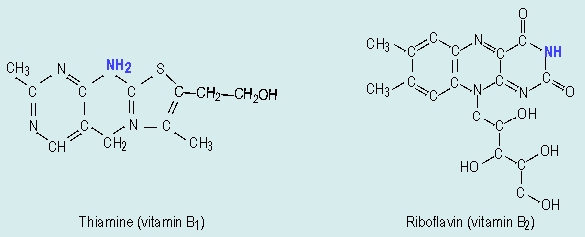
in rice husks that did prevent beri beri was also an amine, now called thiamine or Vitamin
B1 . Funk’s term was changed to vitamin ,
meaning any compound needed in the diet in small amounts to prevent illness.
Amino acids
Vitamins are needed by the body in small amounts, but we also need about
60–70 g of amino acids from protein each day. Amino acids contain both the
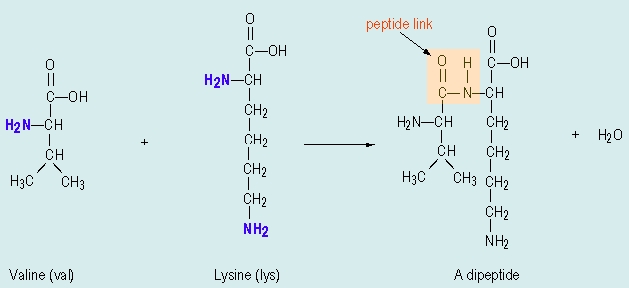
amine and carboxylic acid functional groups. These groups combine to form
a peptide link. Biochemists call a molecule made by combining two amino acids
together a dipeptide .
The proteins formed by chains of amino acids form a large number of the important compounds in the body, from the muscles in your arms and legs, to the enzymes that digest your food, the hormones that send messages around your body, and the antibodies that fight disease.
More amines
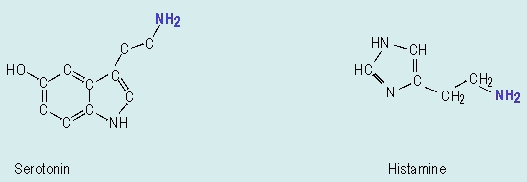
Many other key compounds within your body are also made from specific amino acids, such as serotonin, an important brain chemical and histamine, produced as part of the immune response.
|
||
|
|