|
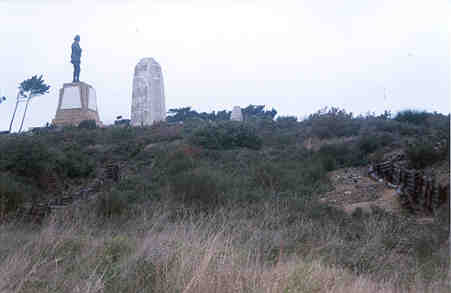 From the northern slope looking up to the top. You can see an old trench to the right. Mustafa Kemal Ataturk statue is in front, the New Zealand Memorial is in the middle, with the smaller of the Turkish ones on the right. This view is from the north, which was on the Turkish side of the front line. The New Zealanders never got this far. |
|||
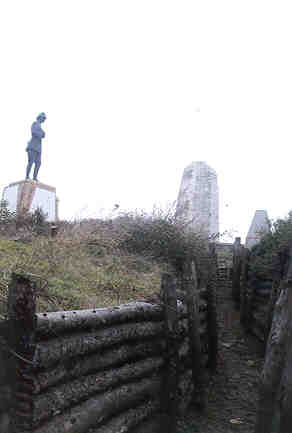 Closer up from within a Turkish trench, still looking up to the top. |
||||
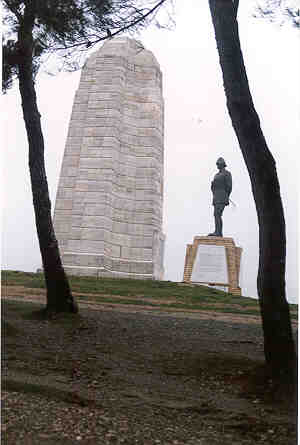 The New Zealand Memorial and Mustafa Kemal, side by side, as they should be. |
||||
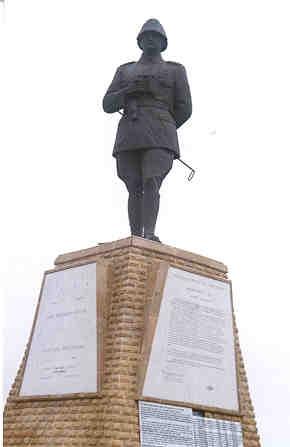 The Mustafa Kemal Ataturk statue, close up. |
||||
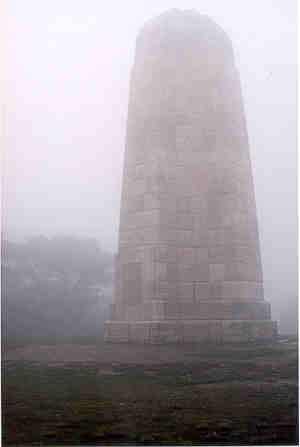 The New Zealand Memorial, close up in the rain and mist of the first day I was there. |
||||
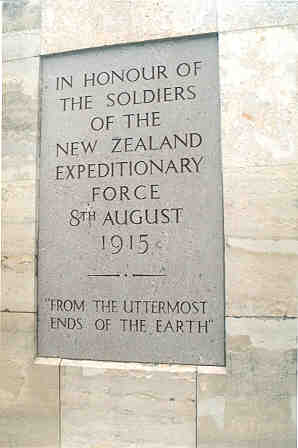 The plaque on the side of the New Zealand Memorial. |
||||
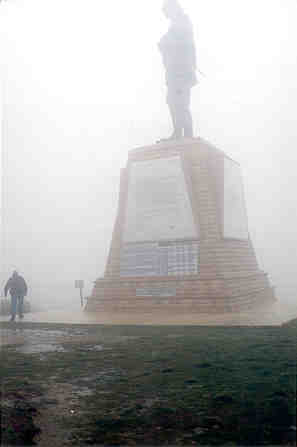 The Mustafa Kemal Ataturk Memorial in the mist and rain. |
||||
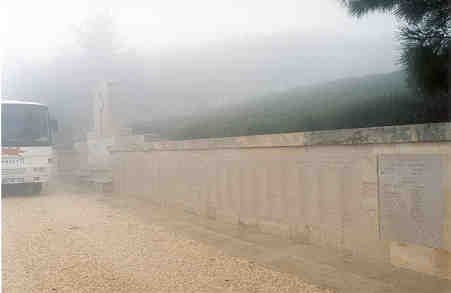 Just below the crest, on the road side, is the Memorial Wall for the New Zealanders who died on Chunuk Bair. Lieutenant Colonel William Malone of the Wellington Infantry Battalion, who led the New Zealand attack, captured Chunuk Bair, and died there, has his name on the wall.
|
||||
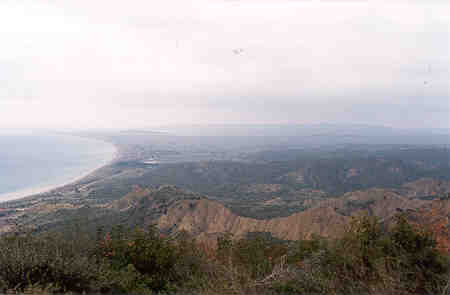 The weather did improve the next day and I took these photos of the view which could be seen from the top of Chunuk Bair. This looks up towards Suvla Bay, looking across the steep valleys, called Deres in Turkish. |
||||
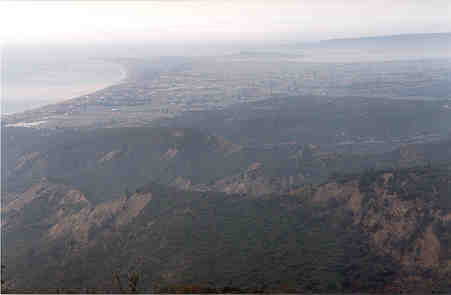 A close up view of the same area. |
||||
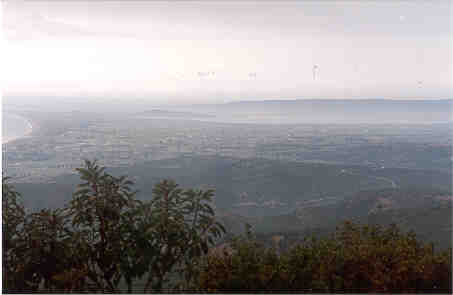 Still looking towards Suvla Bay. From this hill the Anzacs, fighting their way up Chunuk Bair, could see the British soldiers going for a swim on the beach. They then later watched the British get slaughtered when they did try to cross the flat land. While the British were swimming, the Turks got ready! |
||||
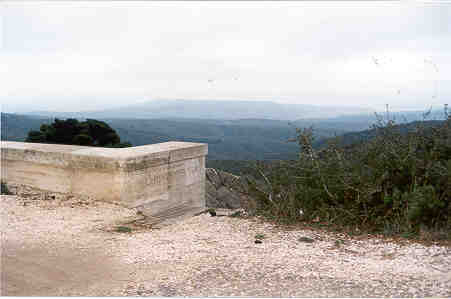 The view looking to the east, down towards the straits of the Dardanelles. The weather was not very clear, (there is almost always a haze in the sky in this part of Turkey all year around). You can just make out the waters of Straits of the Dardanelles. Look just above the hill line on the right of the picture. Trying to capture that stretch of water was what all the men were dying for. |
||||
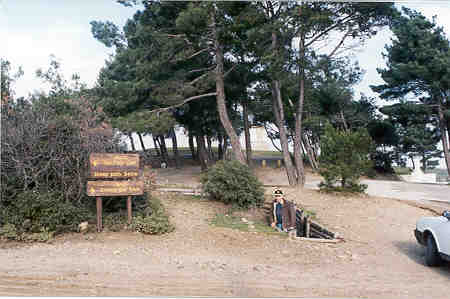 The next day, when the weather was better, my friend Mike is standing in one of the left-over trenches. The trench went around the side of the hill, and on past the Memorials on the crest. It went on down the other side of the hill. Captain Ali Efe had told us that this trench may have been one of the ones dug by the New Zealanders as they tried to get themselves into safe positions from artillery fire from the Turks on the other side of Chunuk Bair. |
||||
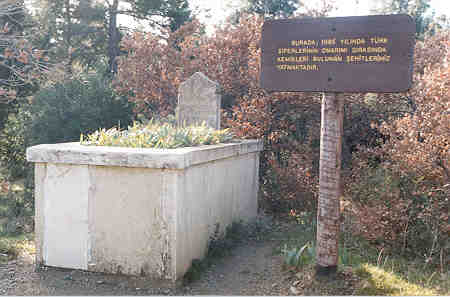 Immediately behind me as I took the photograph above is the grave, by the Turks, to the Unknown Soldier. In keeping with Turkish traditions, the body is buried above the ground. |
||||
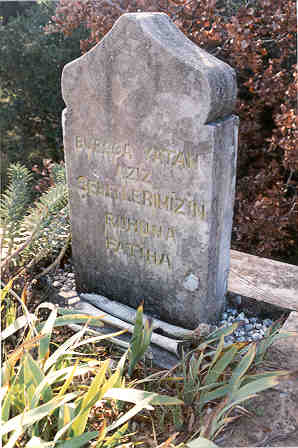 Going closer to look at the headstone I noticed that someone had found human bones from a long dead soldier, and placed them on the grave. They could be either from a Turkish or New Zealand soldier.
In English
this says: (Fatiha is a very holy article from the Muslim religion's holy book, or Bible, the Koran) |
||||
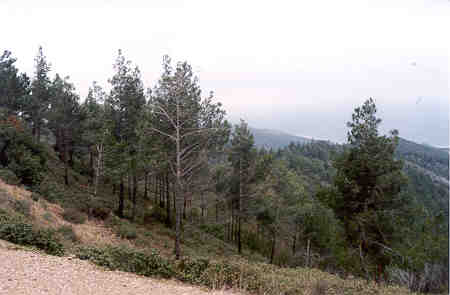 Looking down the side of Chunuk Bair, into the pine trees. The steep ridge on the left is Rhododendron Ridge, with Ari Burnu, where the boats first landed, away in the distance. The Pinnacle is the flat part straight in the middle of the picture. Down to the right, out of sight, is The Farm Cemetery. That is the small piece of flat land that the Wellingtonians rested on, before continuing the climb to the top. |
||||
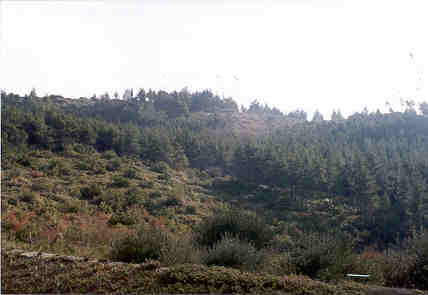 Looking from The Farm Cemetery, back up to the top of Chunuk Bair. You can see the top of the New Zealand Memorial poking up above the hill line. The Wellington men scrambled up the slope on the right, to the top of Rhododendron Ridge, and attacked the Turks with a rush going from right to left across the top of the picture. |
||||
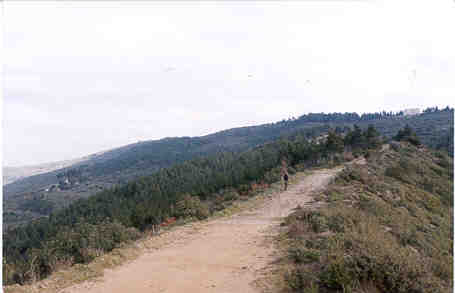 Here I am climbing up the track, back to the top. The track has been cut to allow vehicles to get down with workmen to repair and maintain the cemeteries, and to allow people to get easier access to the cemeteries. The Farm can be seen down the hill on the left. You can see the large Turkish Memorial, which tells the story of the whole invasion and battles, just before the crest of Chunuk Bair. After scaling the final, very steep part, the New Zealanders launched themselves at the summit. |
||||
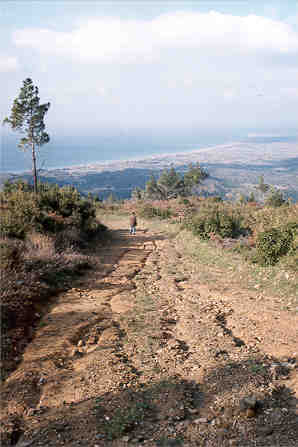 The track up Rhododendron Ridge is steep and rough. Gallipoli gets a lot of rain, and you can see how the soil has been washed away in places. |
||||
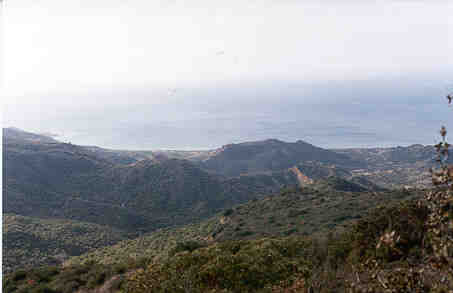 Down near the bottom of Rhododendron Ridge is a little piece of flat land which was called Table Top. In the distance, on the left, you can again see Ari Burnu Point. The Wellington men had walked along the edge of the beach, through a huge trench, called the Great Sap, to the bottom of the hills below, and begun their great climb into history. |
||||
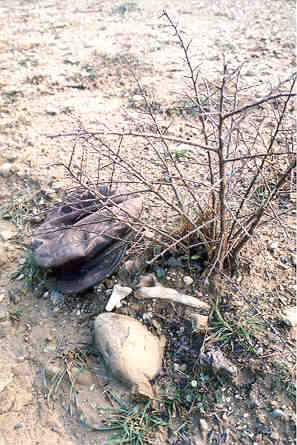 Then I found things which really upset me, pieces of human bones. Here are some under a small thorn bush. I put my hat on the ground beside them so you could see the size. I felt very upset at this time, realising that they had belonged to some poor soldier. I think they may be part of an upper arm, or shoulder. I did not move any of the bones I found. |
||||
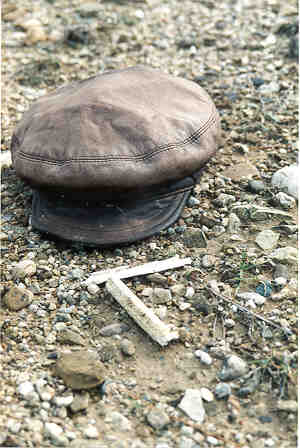 Further up the track, yet more bone pieces. The heavy rains would have been constantly uncovering these bone pieces. |
||||
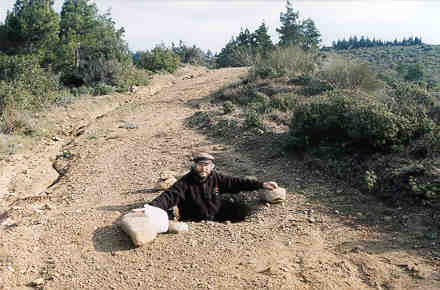 Both sides were constantly digging tunnels, trying to get under each other to plant explosives and blow each other up. We came upon one of the tunnels right in the middle of the track. The roof had collapsed in and people had put stones around it to warn you of the danger of falling in. I climbed down into the tunnel to see how deep it was, and how far it went. |
||||
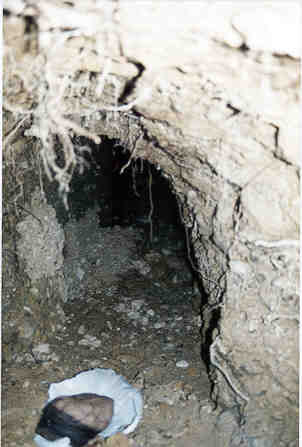 The tunnel just went on and on, away into the dark. I didn't dare go any further, in case the roof fell in and trapped me there. I put my hat on a plastic bag to show the size of the tunnel. It was very cool and quiet in there, really quite spooky. |
||||
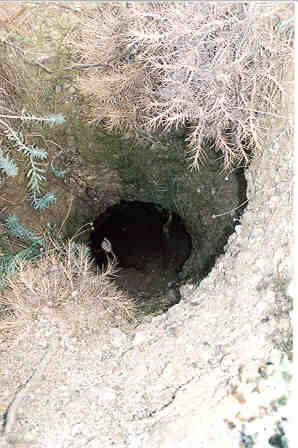 A little further on, just up by the trees in the pictures above, we came upon a tunnel which went straight down. Probably this would have had other tunnels running off it. It was very deep and it looked perhaps about 8 to 10 metres down into the darkness which we could see. A stone fell down, and it kept going into the dark. I didn't want to fall in there! |
||||